Keep access clear
Move vehicles, unlock gates and identify stairs, lifts or narrow passages.
Correct waste identification, controlled loading and clear access protect people, property and the environment.
Unknown liquids, chemicals, paint, fuel, batteries, cylinders, asbestos, healthcare waste, contaminated soil and pressurised containers cannot be treated as ordinary general waste. Send close-up photographs, labels where safe to photograph, estimated quantities and information about leaks or damage.
Specialist services are offered only after assessment and subject to appropriate classification, containment, transport and authorised handling or disposal arrangements.
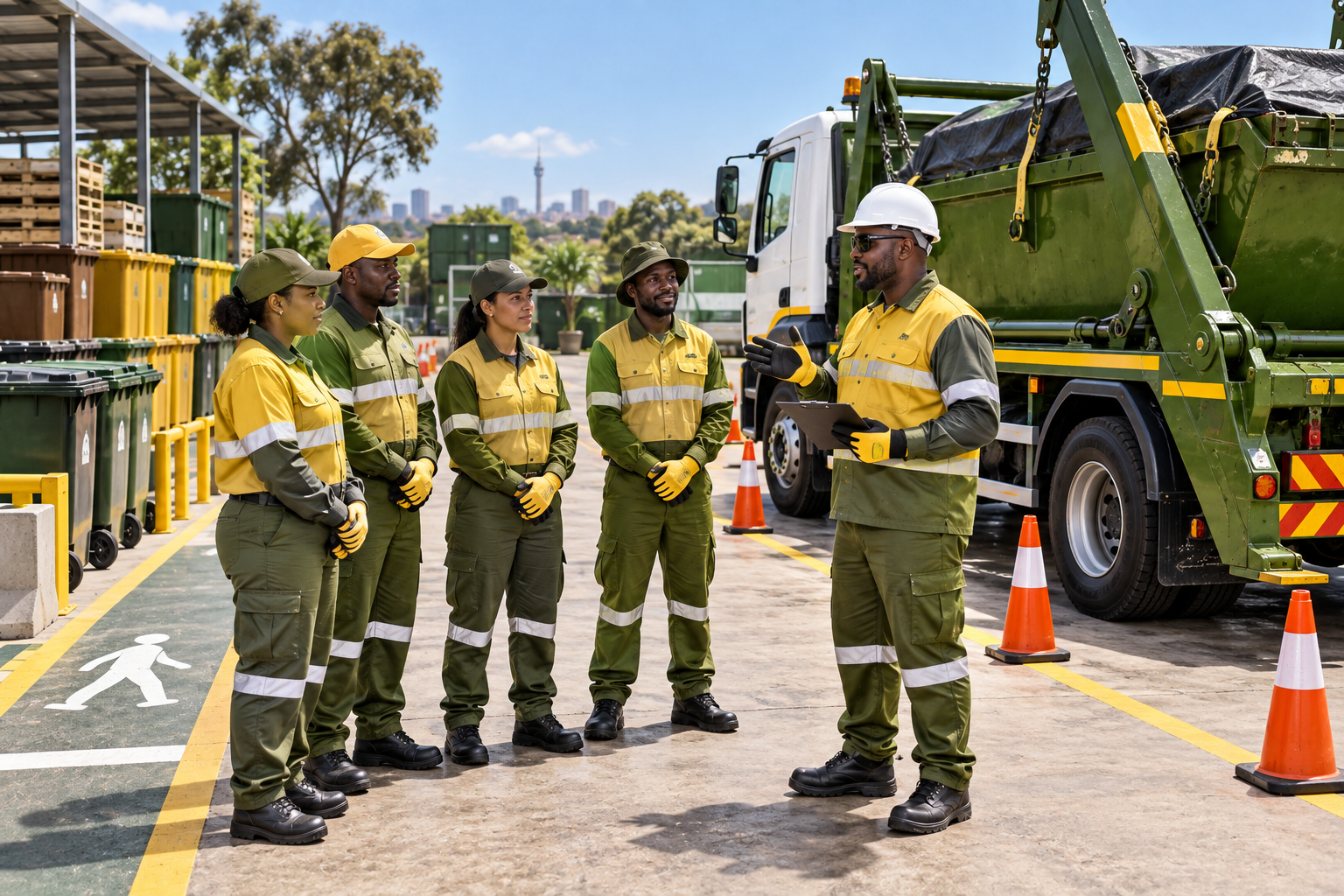
Move vehicles, unlock gates and identify stairs, lifts or narrow passages.
Do not hide heavy, sharp, liquid or hazardous materials in general bags.
Keep children, pets, customers and uninvolved staff away from loading areas.
Only present the materials approved in the confirmed collection scope.
Do not place these materials in ordinary rubbish bags, skips or mixed loads unless CITY WASTE has reviewed and approved the exact contents.
Provide product names, labels, approximate quantities and container condition. Never combine unknown liquids or pour them into drains.
Do not cut, break, sweep or disturb suspected asbestos. Keep people away and request specialist guidance before any movement.
Separate loose batteries and damaged devices from general waste. Report swelling, heat, leakage or fire damage immediately.
Needles, blades, contaminated dressings and medicines require suitable containers and an authorised healthcare-risk arrangement.
Declare gas cylinders, aerosols, fire extinguishers and other pressurised vessels, even when they appear empty.
Explain the source of contamination, estimated volume and known substances. Sampling or classification may be required.
Accurate information helps determine whether the waste can be collected, what containment may be required and whether a specialist service or authorised facility must be involved.
The material description, condition and available documentation are reviewed before acceptance is confirmed.
Suitable packaging, separation and loading controls are identified for the actual waste stream and site.
The proposed vehicle and handling arrangement must suit the material, weight, access and applicable requirements.
Reuse, recovery, treatment or disposal options depend on condition, contamination and authorised-facility acceptance.
Assessment note: A website enquiry is not confirmation that regulated or hazardous material has been accepted. Collection proceeds only after the material and service arrangement have been approved.
No. Keep it separate and disclose it before booking. Mixing materials can create chemical, fire, contamination and handling risks.
Do not open, smell, move or combine it with other waste. Keep people away, photograph it from a safe position and obtain appropriate specialist advice.
Not as ordinary rubble. Suspected asbestos must remain undisturbed and requires an appropriately assessed specialist arrangement.
They help identify hazards, incompatibilities, handling precautions and possible receiving requirements. Provide clear photographs or copies where available.
No. Acceptance depends on accurate disclosure, assessment, suitable containment, route availability and an appropriate authorised handling or disposal option.
Keep people away and contact the appropriate emergency services. Do not wait for a collection quote or use an ordinary waste-removal service for an active emergency.
Send photos, the waste type, quantity, full Gauteng address, access details and preferred date.